Best B2B Supplier Platforms in Europe for 2026
A practical 2026 guide to the top European B2B supplier platforms — directories, curated marketplaces, and food and beverage specialists — and how to choose the right one for your product and stage.
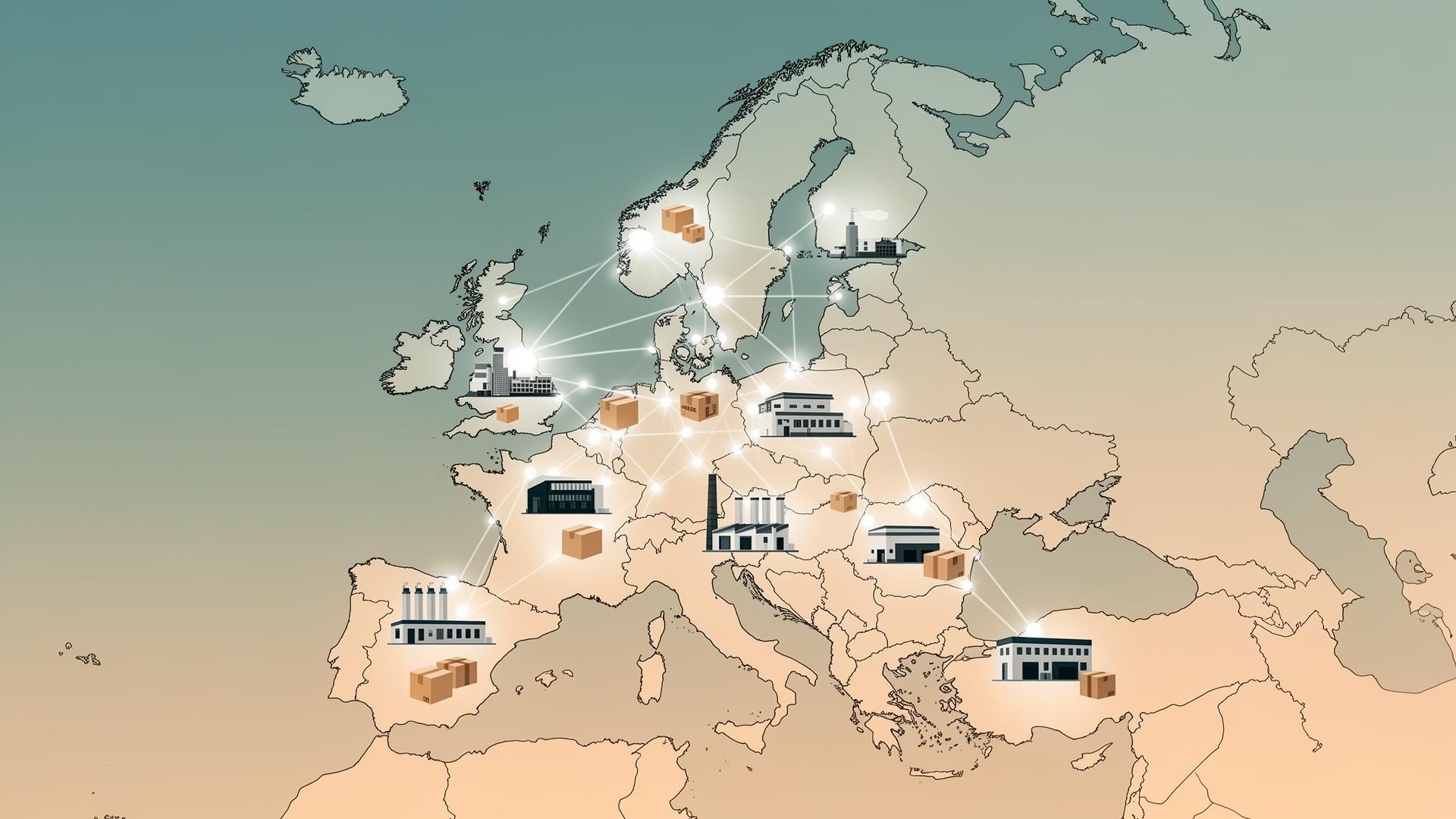
Finding a manufacturer or supplier in Europe used to mean trade shows, cold emails, and a spreadsheet of half-verified contacts. In 2026, a set of B2B platforms has replaced most of that work with structured discovery, verified profiles, and request-for-quote workflows. The catch is that these platforms are not interchangeable. Some are open directories with millions of listings, some are curated marketplaces with vetted manufacturers, and some specialize in a single category like packaging, metals, or meat.
This guide compares ten B2B supplier platforms worth knowing in Europe for 2026, what each does well, and how to choose the right one for your product and stage.
Key Takeaways
- European B2B supplier platforms fall into three groups: open directories, curated marketplaces, and category specialists. Match the type to your need before comparing brands.
- Directories like EUROPAGES, wlw, and Kompass offer enormous reach but limited verification and no built-in workflow.
- Curated marketplaces like Wonnda and co-manufacturing.com trade breadth for vetting, structured RFQs, and faster matching.
- Specialists like Packhelp, Packmatic, Vanilla Steel, and MeatBorsa go deep in one category and often beat generalists there.
- Global platforms like Alibaba still matter for high-volume, commoditized orders, with longer lead times as the trade-off.
- The right choice depends on category, order volume, verification needs, and whether you want a directory or a managed sourcing workflow.
How European B2B Supplier Platforms Differ
A B2B supplier platform is a digital service that helps brands and buyers find, evaluate, and contact manufacturers or suppliers. In Europe, these platforms vary far more than their marketing suggests, and the differences matter when you are committing to a production partner.
There are three broad types:
- Open directories. Large databases of company listings you search and filter yourself. Reach is the selling point. Verification, response rates, and data freshness are on you.
- Curated marketplaces. Smaller, vetted supplier networks with structured requests, matching, and often a workflow layer for quotes, samples, and projects. You trade raw volume for signal and speed.
- Category specialists. Platforms built around one vertical, such as packaging, metals, or meat, with deeper supplier coverage and category-specific tooling.
Knowing which type you need saves weeks. A brand sourcing a contract manufacturer for supplements has very different needs from a procurement team buying spot steel or comparing packaging vendors.
The Best B2B Supplier Platforms in Europe for 2026
1. Wonnda
Wonnda is a Berlin-based B2B sourcing platform focused on private label and contract manufacturing across consumer goods. It connects brands and retailers with a network of more than 20,000 vetted manufacturers spanning around 600 FMCG categories, including beauty, supplements, food, beverages, personal care, household products, apparel, pet products, packaging, and raw materials. The supply base is Europe and US-first.
What separates Wonnda from a directory is the workflow layer. Buyers post one requirement (an RFP or RFQ) and receive multiple quotes from relevant suppliers, then manage samples, contracts, and supplier relationships in one place. The platform reports a match rate above 80% between buyers and suppliers and operates on a 0% commission model, so pricing is negotiated directly between the two sides.
Best for: consumer brands and retailers that want verified private label or contract manufacturers across multiple categories, with a structured request-and-quote process.
Watch for: the network is curated rather than exhaustive, so highly industrial or non-consumer categories may be thinner than on a general directory.
2. co-manufacturing.com
co-manufacturing.com is a sourcing platform and resource focused specifically on contract manufacturing and co-packing. It pairs a manufacturer directory with practical guides for brands trying to understand co-man relationships, MOQs, and how to qualify a production partner. The focus is narrower than a general marketplace, which is the point: every supplier and every article is oriented around finding a factory to produce your product to spec.
Best for: brands at the point of choosing a co-manufacturer or co-packer that want category-specific guidance alongside supplier discovery.
Watch for: as a focused platform, breadth outside contract manufacturing and co-packing is intentionally limited. Confirm coverage in your exact product category.
3. Alibaba
Alibaba is not a European platform, but no honest comparison can ignore it. For high-volume, commoditized products where unit cost dominates, it gives access to a vast base of suppliers, mostly in China and Southeast Asia. Many European brands use it alongside a European platform rather than instead of one.
The trade-offs are real: longer lead times, higher minimums on some categories, more complex logistics and compliance, and more distance to manage quality. Trade Assurance and supplier verification badges help, but the qualification work is still substantial.
Best for: large, price-sensitive orders of commoditized products where lead time and proximity matter less than unit cost.
Watch for: compliance, lead time, and quality oversight are heavier than with a vetted European supplier, so factor in total landed cost, not just the quoted price.
4. EUROPAGES
EUROPAGES is one of the largest European B2B directories, listing in the region of 2.6 million companies across 26 languages. Operated by Visable, it is a discovery tool first: you search by product, industry, or region and browse company profiles across effectively every sector, from raw materials to finished goods.
Its strength is breadth and language coverage, which makes it useful for casting a wide net across multiple European markets. Because it is a directory, there is no managed RFQ workflow and verification depth varies by listing, so qualification falls to the buyer.
Best for: building a broad long list of potential suppliers across many countries and industries.
Watch for: limited verification and no built-in quoting or project tooling. Expect to vet and contact suppliers yourself.
5. wlw (wer liefert was)
wlw, formerly “wer liefert was,” is the leading B2B marketplace for the German-speaking region (Germany, Austria, Switzerland). Also operated by Visable, it sits alongside EUROPAGES, and together the two platforms host more than 2.8 million European companies. For buyers targeting DACH suppliers specifically, wlw offers focused regional coverage and German-language profiles.
Best for: finding suppliers and manufacturers in the German-speaking market, where DACH coverage and language matter.
Watch for: like EUROPAGES, it is a directory rather than a managed marketplace, and its strength is concentrated in the DACH region rather than pan-European or global.
6. Kompass
Kompass is a long-established global business directory with a very large European footprint, covering close to 40 million companies and offering roughly 60 search filters across geography, industry, and financial data. The filtering depth is its main advantage for procurement teams that need to segment suppliers precisely.
In March 2026, Expandi Limited announced the acquisition of Kompass, positioning the combined business as a large independent European provider of B2B data, technology, and marketing services. For buyers, the practical takeaway is that Kompass sits firmly in the data and directory camp rather than the managed marketplace camp.
Best for: procurement and sales teams that want deep filtering and company data across a very large database.
Watch for: it is a data and directory platform, not a sourcing workflow. There is no structured RFQ or matching layer in the way a curated marketplace provides.
7. Vanilla Steel
Vanilla Steel is a Berlin-based marketplace for the European steel and metals industry, founded in 2020 by a team that met at Thyssenkrupp. It runs an e-auction and spot-trading model that connects steel producers and processors with buyers, covering excess and prime metals such as overrollings, aged inventory, declassified material, and semi-finished products. The platform aggregates spot supply from hundreds of suppliers and demand from thousands of buyers across Europe, with established producers like Saarstahl trading on it.
Best for: buyers and sellers of steel and metals looking for a transparent, digital way to trade excess and prime material in Europe.
Watch for: this is a metals-specific marketplace, so it is only relevant if steel or industrial materials are what you source.
8. MeatBorsa
MeatBorsa is a B2B marketplace built specifically for meat trading. It connects verified suppliers and buyers, lets users post listings or supply requests (with AI-assisted drafting), browse by category such as beef, pork, poultry, lamb, veal, and turkey, and negotiate and close deals in-platform. It serves meat wholesalers, distributors, importers, exporters, and processors across EU and international markets, and is available on web and mobile.
Best for: meat wholesalers, importers, and processors that want a dedicated trading network rather than a general food platform.
Watch for: the focus is meat trading specifically, so it is not a fit for broader food and beverage or non-food sourcing.
9. Packhelp
Packhelp is a custom packaging platform founded in 2015 that lets brands design and order packaging online. It offers tiers from Packhelp Studio for small businesses (orders from around 30 pieces) up to Packhelp Plus for mid-market brands scaling volume, with a catalog spanning boxes, mailers, labels, and food packaging, a free online editor, and instant quoting. The platform leans into sustainability and has worked with brands across roughly 30 countries.
Best for: brands that want to design and order custom packaging directly online, including small runs, with fast quoting.
Watch for: it is a web-to-print packaging provider rather than a multi-category sourcing platform, so it covers packaging only.
10. Packmatic
Packmatic is a Berlin-based digital packaging platform founded in 2021. Rather than printing packaging itself, it operates as a matchmaking layer, connecting businesses with a network of more than 300 packaging suppliers across Europe. It targets large FMCG and industrial companies as well as mid-sized product brands, matching them to specialized suppliers and reporting average cost savings above 15% in many cases.
Best for: FMCG and industrial buyers with ongoing or complex packaging needs that want sourcing optimization and supplier matching rather than a print-on-demand catalog.
Watch for: the value is in matching and procurement for higher-volume packaging needs, so very small one-off orders may be better served elsewhere.
Comparison Table
| Platform | Type | Best for | Coverage | Workflow / RFQ |
|---|---|---|---|---|
| Wonnda | Curated marketplace | Private label & contract manufacturing | Europe & US, consumer goods | Yes |
| co-manufacturing.com | Curated platform | Contract manufacturing & co-packing | Co-man / co-pack focus | Yes |
| Alibaba | Global marketplace | High-volume commodity orders | Global (China & SE Asia) | Yes |
| EUROPAGES | Open directory | Broad supplier long lists | Europe-wide, 26 languages | No |
| wlw | Open directory | DACH suppliers | German-speaking region | No |
| Kompass | Directory & data | Deep filtering, company data | Global, strong in Europe | No |
| Vanilla Steel | Specialist marketplace | Steel & metals trading | Europe | Yes (auctions) |
| MeatBorsa | Specialist marketplace | Meat trading | EU & international | Yes |
| Packhelp | Specialist (packaging) | Custom packaging, small to mid runs | ~30 countries | Yes (instant quote) |
| Packmatic | Specialist (packaging) | Packaging sourcing & matching | Europe | Yes |
How to Choose the Right Platform
The best platform is the one that matches your category, volume, and how much of the sourcing process you want to run yourself. A practical way to decide:
- Start with category fit. If you buy packaging, metals, or meat, a specialist (Packhelp or Packmatic, Vanilla Steel, MeatBorsa) will beat a generalist on depth. For multi-category consumer goods, a cross-category marketplace like Wonnda fits better. For contract manufacturing specifically, a focused platform like co-manufacturing.com is built for that decision.
- Decide directory or workflow. If you have a procurement team that wants to do its own qualification across millions of listings, a directory like EUROPAGES, wlw, or Kompass works. If you want verified matches and a structured request-and-quote process, choose a curated marketplace.
- Weigh verification against reach. Directories maximize reach but push verification onto you. Curated marketplaces and specialists vet suppliers but cover fewer companies. Be honest about how much vetting time you actually have.
- Factor in volume and nearshoring. Smaller runs, faster turnaround, and regulated categories favor European platforms. Very large commodity orders may justify a global platform despite the added logistics and lead time.
- Check the workflow layer. Quotes, samples, contracts, and supplier management in one place save real time once you move past discovery. A directory leaves you to stitch that together with email and spreadsheets.
If you want a structured way to find and compare verified manufacturers across consumer goods categories, post your sourcing requirement and let suitable suppliers come to you, rather than working through a directory by hand.
Common Mistakes When Choosing a Supplier Platform
- Confusing reach with quality. A database of millions of listings is not the same as millions of verified, responsive manufacturers. More listings often means more vetting work.
- Ignoring category depth. A platform can be excellent overall and still be thin in your specific category. Always test search results in your exact product area, and consider a specialist if one exists for your category.
- Overlooking the workflow. Finding a supplier is the easy part. Managing quotes, samples, MOQs, lead times, and contracts is where projects stall. A platform with a built-in workflow removes a lot of friction.
- Skipping verification on directories. On open directories, treat every listing as unverified until you have checked certifications, references, and capacity yourself.
- Picking one platform for everything. Many brands run a curated marketplace for finished goods, a specialist for packaging, and a global platform for large commodity orders. Using the right tool per job beats forcing one platform to do all of it.
Frequently Asked Questions
What is the best B2B supplier platform in Europe for 2026?
There is no single best platform. For multi-category private label and contract manufacturing, Wonnda is a strong choice, and co-manufacturing.com is purpose-built for co-man and co-packing decisions. For the widest directory reach, EUROPAGES, wlw, and Kompass lead. For packaging, metals, or meat, the specialists (Packhelp, Packmatic, Vanilla Steel, MeatBorsa) go deeper. The best fit depends on your category, order volume, and whether you want a directory or a managed sourcing workflow.
What is the difference between a B2B directory and a curated marketplace?
A directory is a searchable database of company listings where you find and qualify suppliers yourself, prioritizing reach. A curated marketplace vets suppliers and adds a workflow layer, such as structured RFQs, matching, and quote management, prioritizing signal and speed over raw volume.
Should I use a generalist platform or a category specialist?
Use a specialist when your category has a strong one. Packaging (Packhelp, Packmatic), metals (Vanilla Steel), and meat (MeatBorsa) all have dedicated platforms that beat generalists on supplier depth and category-specific tooling. Use a cross-category marketplace or directory when you source across several categories or when no specialist covers your product.
Are European suppliers better than sourcing from Asia?
It depends on the product. European suppliers typically offer shorter lead times, easier compliance with EU regulations, and lower minimums on many categories, which suits regulated or smaller-batch products. Global platforms like Alibaba can offer lower unit costs at high volume for commoditized products. Many brands use both depending on the order.
How do I verify a manufacturer found on a supplier platform?
Check certifications relevant to your category, ask for references and existing clients, confirm production capacity and minimum order quantities, request samples, and clarify lead times and compliance documentation in writing. Curated marketplaces and specialists do some of this vetting upfront, while open directories leave it entirely to the buyer.